

L’imaging non è un accessorio, ma il cuore del prodotto radiofonico e pertanto va studiato, progettato da designers specializzati.
🇬🇧 English version below
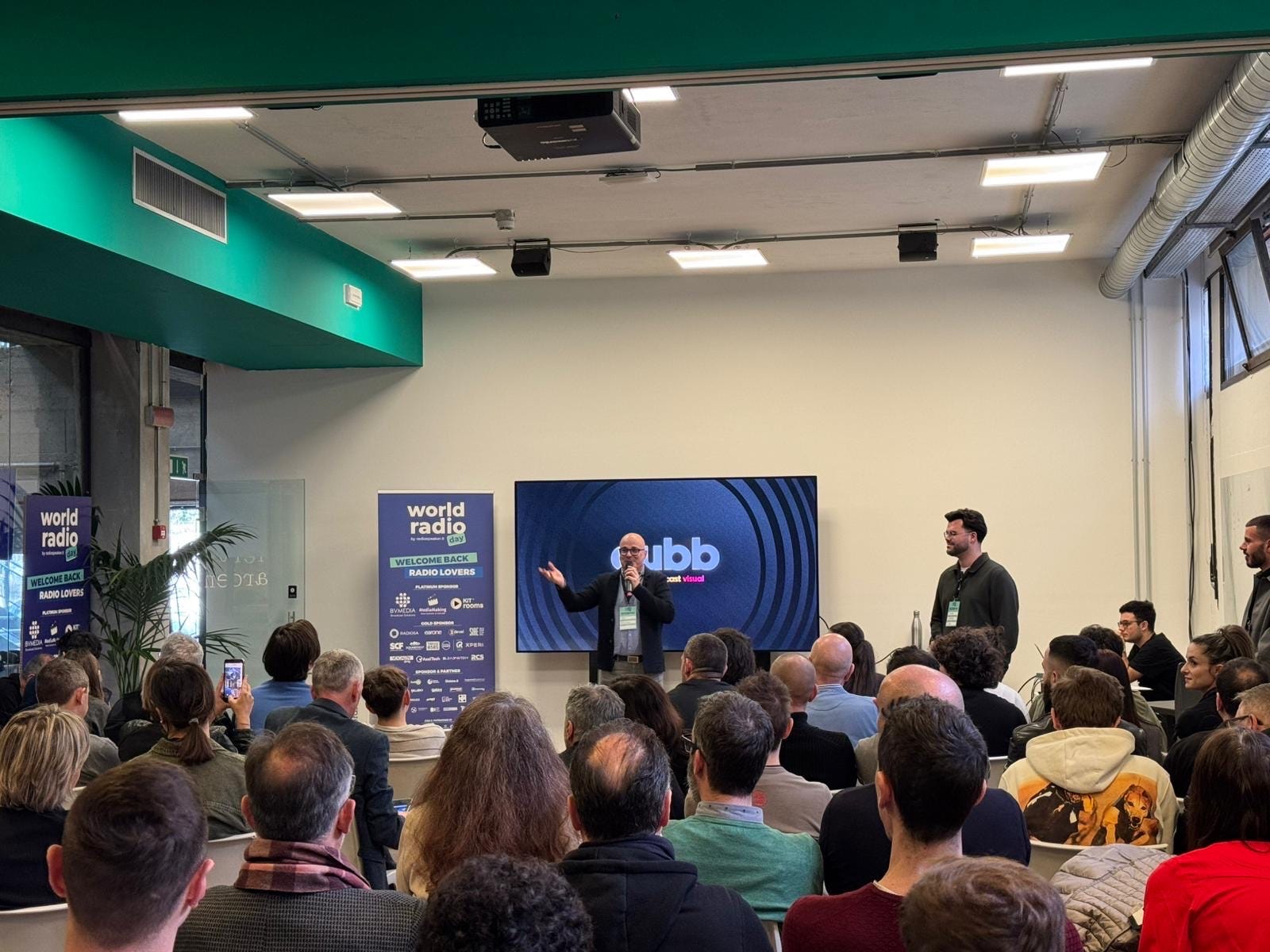
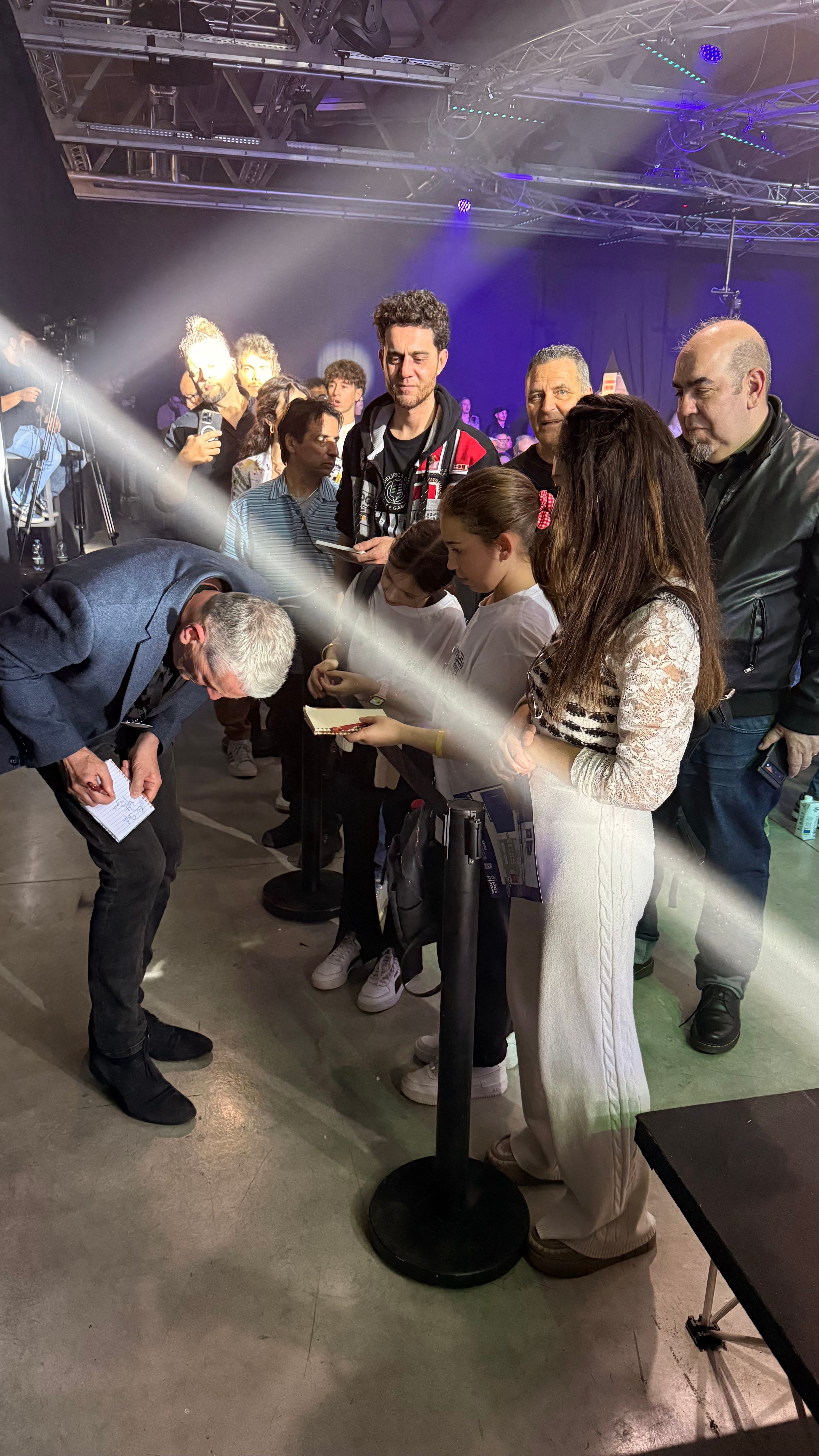
Al World Radio Day di Milano, durante il workshop che ho curato dedicato all’imaging radiofonico (e non solo), abbiamo affrontato un tema che in Italia continua a essere sottovalutato.
Con me c’era anche Milan Sweeck di Dubb, che ha mostrato in modo magistrale come si costruiscono jingles e power intro con un approccio moderno, strutturato e profondamente legato al formato.
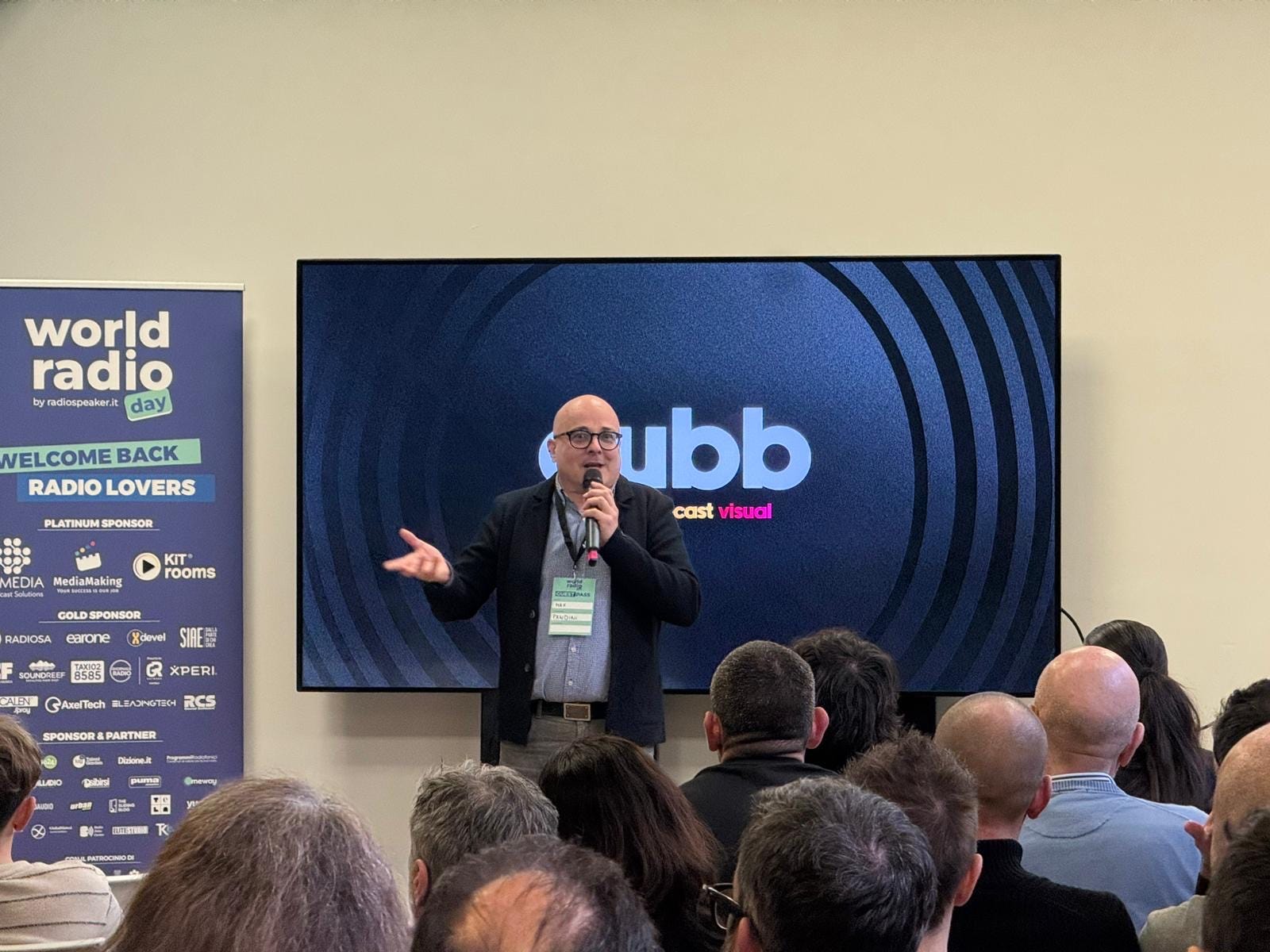
Ed è proprio da qui che siamo ripartiti: Trovarsi al World Radio Day di Milano per migliorarci, per aumentare il valore della radio.
E per farlo non basta la ricerca, non bastano i dati, non bastano le analisi. Serve osservare.
Osservare in campo largo, come abbiamo sempre fatto quando ascoltavamo RMC, RTL Luxembourg, Z100.
Più gli orizzonti sono ampi, più opportunità ci sono.
Più guardiamo fuori, più capiamo cosa manca dentro, Perché serve guardare lontano; le radio che crescono sono quelle che osservano il mondo, che studiano i linguaggi globali.
Il problema nelle radio nel l’approccio alla produzione degli elementi sonori è spesso agire come se fossimo al “supermercato del suono”
• “Quanto vengono 3 jingles e 2 IDs?”
• “Quanta roba mi fai con 500 euro?”
• “Me ne fai un po’ di più allo stesso prezzo?”
È una mentalità che riduce l’imaging a una merce, a un prodotto a peso.
Ma l’imaging non è una commodity. È identità.
L’imaging è parte del prodotto, non un’aggiunta
L’imaging non è un abbellimento.
Non è un “extra”.
Non è un pacchetto di effetti sonori.
L’imaging è parte del prodotto radiofonico.
È ciò che si traduce in:
• regole
• clock
• impostazioni
• struttura
• ritmo
• percezione
È funzionale alla radio e al suo Formato.
È uno degli elementi che dà valore sia al brand che al prodotto, senza imaging, il formato resta teoria, con l’imaging, il formato diventa esperienza.
Così come il suono, anche gli elementi sonori sono parte dell’esperienza emozionale
L’imaging appartiene a quel mondo chiamato suono: tutto ciò che non è musica e non è parola, ma che costruisce l’atmosfera, il respiro, la personalità della stazione.
È parte dell’esperienza emozionale che la radio offre al suo pubblico.
È ciò che permette alla radio di mantenere la sua promessa universale:
• makes you feel better
• let you know better
L’imaging è il ponte tra emozione e funzione, tra identità e servizio, tra brand e ascoltatore. Un power intro, per esempio, è una geniale creazione artistica che personalizza le hit preferite dagli ascoltatori con elementi del brand della stazione, per far sì che ogni volta che l’ascoltatore ricorda e magari canta la propria canzone preferita, associ anche con il ricordo il nome della radio, o il suo logo sonoro inseriti ad arte sull’intro della song.
E allora vincono quelle radio che capiscono come l’Imaging non sia un “di più”, ma un codice narrativo, parte essenziale e vitale dell’offerta.
E questo è stato il cuore del workshop: non solo come si producono jingles, ma perché.
Perché servono.
Perché contano.
Perché fanno la differenza.
Se vogliamo aumentare il valore della radio, dobbiamo iniziare anche da qui: dalla cura del suono che la rappresenta.
L’imaging non è un costo, ma è un investimento, è ciò che rende una radio riconoscibile, credibile, coerente, è ciò che trasforma un flusso in un’esperienza. Le radio di maggiore successo investono cifre considerevoli nella realizzazione della “confezione sonora” ogni anno.
Ed è ciò che, ancora una volta, abbiamo ribadito insieme a Milano: la radio del futuro non si costruisce “a peso”, ma con una visione.
🇬🇧
Imaging isn’t an accessory — it’s the heart of the radio product, and for this reason it must be studied and designed by specialized audio designers.
At the World Radio Day in Milan, during the workshop I led on radio imaging (and beyond), we tackled a topic that in Italy is still widely underestimated.
Joining me was Milan Sweeck from Dubb, who brilliantly demonstrated how jingles and power intros are built with a modern, structured, format‑driven approach.
And that’s exactly where we started: meeting at World Radio Day in Milan to improve ourselves, to increase the value of radio.
And to do that, research isn’t enough. Data isn’t enough. Analysis isn’t enough.
We need to observe.
Observe with a wide lens, just like we used to do when we listened to RMC, RTL Luxembourg, Z100.
The broader the horizon, the greater the opportunities.
The more we look outward, the more we understand what’s missing inside. Because we need to look far; the stations that grow are those that observe the world and study global languages.
The problem in many radio stations is the approach to producing sonic elements — often acting as if we were at a “sound supermarket”:
• “How much for 3 jingles and 2 IDs?”
• “How much can you give me for 500 euros?”
• “Can you throw in a bit more for the same price?”
It’s a mindset that reduces imaging to a commodity, a product sold by weight.
But imaging is not a commodity. It’s identity.
Imaging is part of the product, not an add‑on.
Imaging is not decoration.
It’s not an “extra.”
It’s not a bundle of sound effects.
Imaging is part of the radio product.
It translates into:
• rules
• clocks
• settings
• structure
• rhythm
• perception
It serves the station and its format.
It’s one of the elements that gives value to both the brand and the product. Without imaging, a format remains theory; with imaging, the format becomes experience.
Just like sound, sonic elements are part of the emotional experience.
Imaging belongs to that world we call “sound”: everything that is not music and not speech, yet builds the atmosphere, the breath, the personality of the station.
It’s part of the emotional experience that radio offers its audience.
It’s what allows radio to keep its universal promise:
• makes you feel better
• lets you know better
Imaging is the bridge between emotion and function, between identity and service, between brand and listener. A power intro, for example, is a brilliant artistic creation that personalizes listeners’ favorite hits with the station’s brand elements, so that every time the listener remembers — or even sings — their favorite song, they also recall the station’s name or sonic logo, seamlessly woven into the intro.
And that’s why the stations that win are those that understand imaging is not a “nice‑to‑have,” but a narrative code — an essential, vital part of the offering.
This was the core of the workshop: not just how jingles are made, but why.
Why they’re needed.
Why they matter.
Why they make the difference.
If we want to increase the value of radio, we must start here as well: from the care of the sound that represents it.
Imaging is not a cost — it’s an investment. It’s what makes a station recognizable, credible, coherent. It’s what turns a flow into an experience. The most successful stations invest significant budgets every year in their “sonic packaging.”
And that’s what we reiterated once again in Milan: the radio of the future is not built “by weight,” but with vision.