
Italian and Dutch Version below
EN
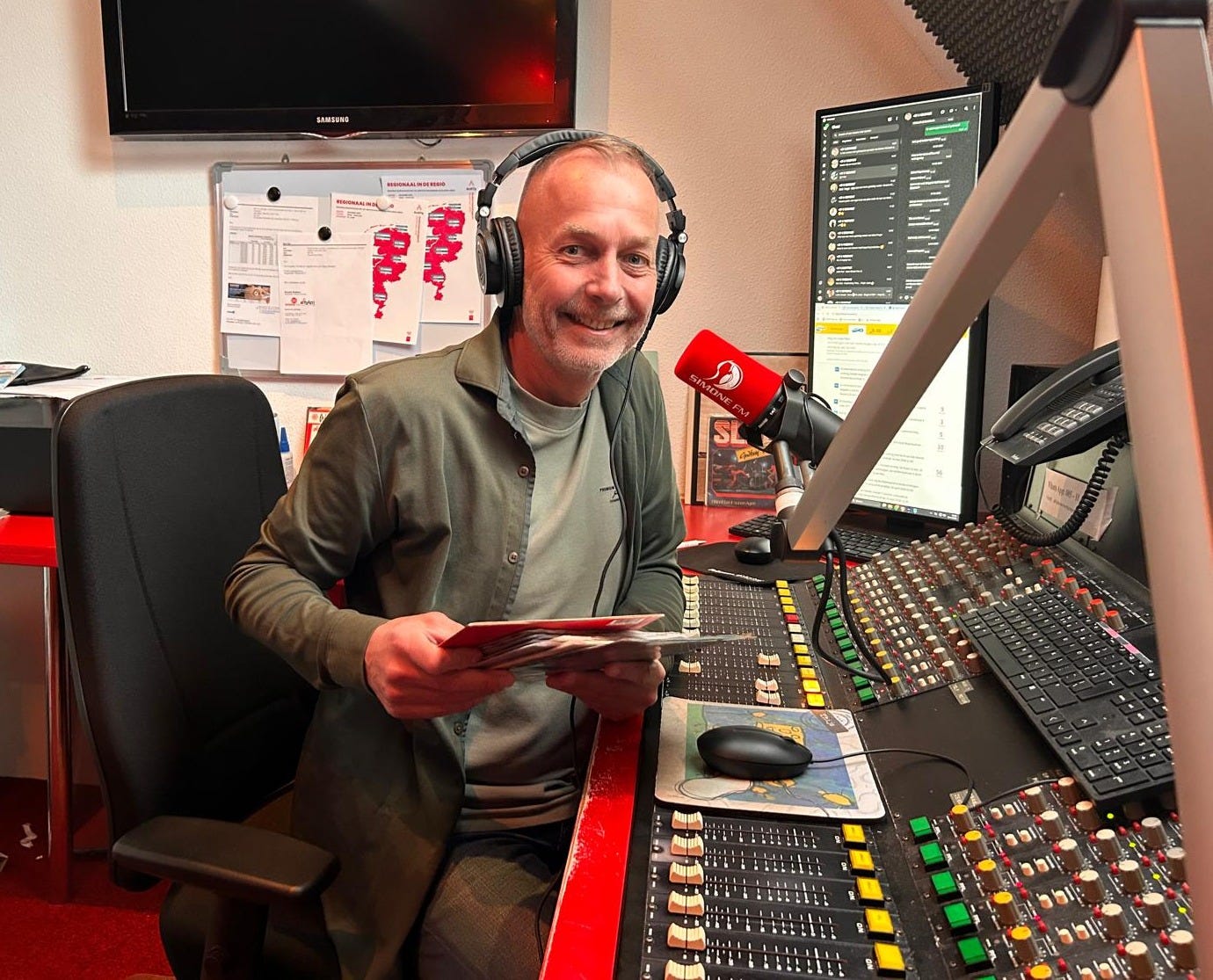
In recent months, Simone FM — a historic broadcaster in the north of the Netherlands — has expanded its coverage, strengthened its market position, and embraced an editorial choice that feels almost revolutionary today: three hours a day of music played exclusively from vinyl, hosted live every morning by the station’s owner, Bert Vos.
I spoke with him to understand how this idea was born, what it means to make “analog radio” in 2026, and why vinyl keeps growing while everything else becomes digital.
Bert, let’s start from the beginning. Why look for such a radical “unique selling point” for a radio station?
Bert Vos: “As a radio station, we were looking for something that truly set us apart, without becoming too niche. We wanted a feature that allowed us to stay broad and accessible, yet unmistakably unique.”
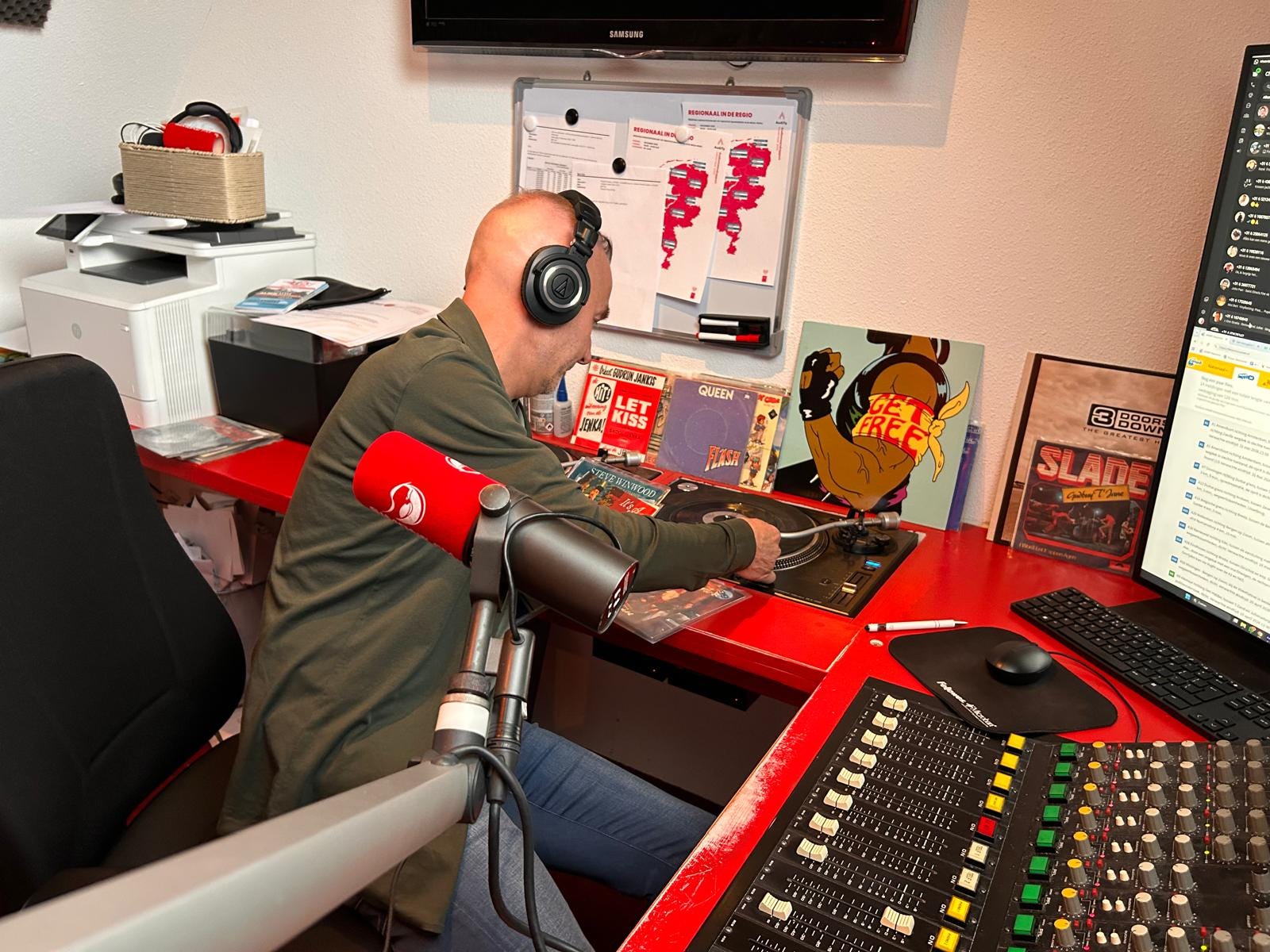
When vinyl suddenly returned to the spotlight among real music lovers — he tells me — the spark came almost by accident. “We installed turntables in the studio just to do something with them occasionally. Then a one‑hour vinyl slot became a hit… and from there it evolved into a daily three‑hour show.”
Why vinyl? What does it offer that digital can’t?
Bert: “Someone who has nothing with vinyl will still hear their classics. But vinyl lovers become more enthusiastic — and that makes them listen more.”
But it’s not just nostalgia. It’s an experience.
“The crackle and the noise are like music to the ears. And on the radio, classics gain an extra emotional dimension.”
Vinyl has exploded in popularity in recent years. How do you explain it?
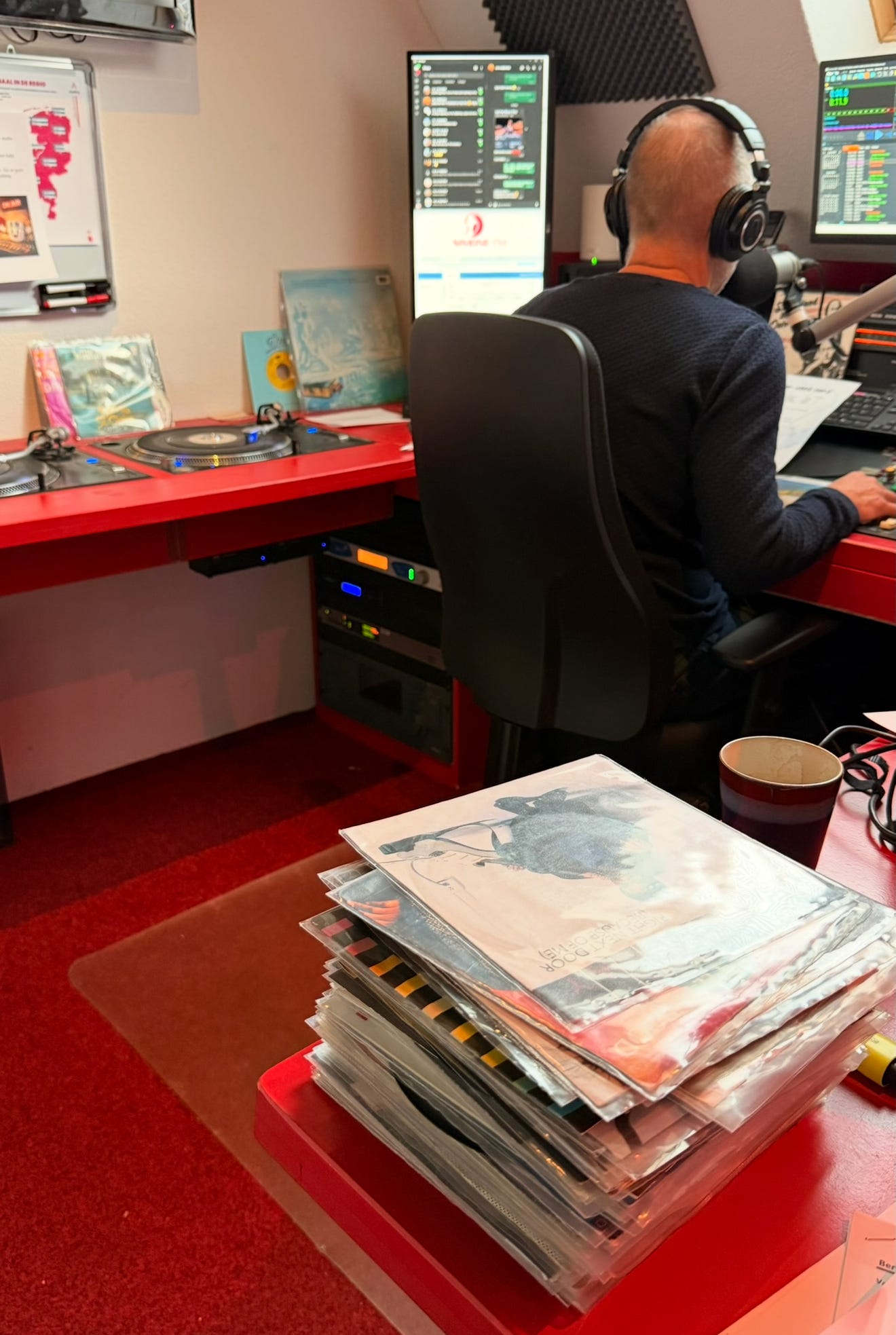
Bert: “Vinyl’s popularity has grown enormously over the past five or six years. Producers can barely keep up with demand, every self‑respecting artist releases on vinyl, record stores are flourishing again.”
And then there’s the generational shift he sees at home:
“My kids, 14 and 17, love putting a record on the turntable. They study the cover, read the booklet while the music plays. It’s a complete experience.”
There’s an anecdote you often share — the one about your youngest son.
Bert: He smiles. “I asked him why he liked vinyl so much. He said: ‘Dad, then it’s yours. It’s your record. On Spotify you borrow the music and you have to pay every month. If you stop paying, you can’t listen anymore. This is yours.’”
A 14‑year‑old speaking like a 50‑year‑old collector.
Let’s clarify something: does vinyl sound better?
Bert: “No, definitely not.”
Then comes the perfect metaphor:
“I compare it to the old incandescent light bulb versus LED. LED is brighter, but the old bulb gives a warmer light. Vinyl is like that: not technically better, but warmer, more human.”
Playing vinyl live also changes the way you do radio, doesn’t it?
Bert: “Completely. You have to go back to traditional radio. There are no intro times on a screen, you need to know how a record ends, you need to build your talk and transitions with your head, not with software.”
And this has a wonderful side effect:
“Music becomes the center of the program again. In many radio shows it has become an afterthought. With vinyl, it can’t be.”
After seven or eight years of doing this, I have to ask: is vinyl just a hype?
Bert: “No, it isn’t. I see it every day. I see it in the numbers. I see it in people. The turnover of new vinyl is huge — and that’s without even mentioning the second‑hand market. It’s a stable phenomenon, not a passing trend.”
So why does it work so well on the radio?
Bert: “Because it’s authentic. Because it’s physical. Because it’s imperfect. And because, in a world where everything is instant and digital, vinyl forces you to be with the music. To touch it, look at it, respect it.”
He closes with a sentence that feels like a manifesto:
“Vinyl isn’t a hype. It’s a way of listening.”
IT
Negli ultimi mesi Simone FM — storica emittente del nord dei Paesi Bassi — ha ampliato la propria copertura, consolidato il mercato e, soprattutto, ha scelto una strada editoriale che oggi sembra quasi rivoluzionaria: tre ore al giorno di musica suonata esclusivamente da vinile, condotte in diretta dal proprietario stesso, Bert Vos.
L’ho intervistato per capire come nasce questa scelta, cosa significa fare radio “analogica” nel 2026 e perché il vinile continua a crescere mentre tutto il resto diventa digitale.
Bert, partiamo dall’inizio. Perché cercare un “unique selling point” così radicale per una radio?
Bert Vos: «Come radio cercavamo qualcosa che ci distinguesse davvero, senza diventare troppo di nicchia. Volevamo un elemento che ci permettesse di essere ampi, popolari, ma allo stesso tempo unici».
Quando il vinile è tornato al centro dell’attenzione dei veri appassionati — mi racconta — la scintilla è scattata quasi per caso. «Abbiamo installato dei giradischi in studio per fare qualche item ogni tanto. Poi un’ora di vinile è diventata un successo… e da lì è nato un programma quotidiano di tre ore».
Perché proprio il vinile? Cosa offre che il digitale non può dare?
Bert: «Chi non ha nulla con il vinile ascolta comunque i suoi classici. Ma chi ama il vinile diventa più entusiasta, e quindi ascolta di più».
Il punto, però, non è solo l’effetto nostalgia. È un’esperienza.
«Il crepitio e il rumore sono come musica per le orecchie. E in radio i classici suonano con una dimensione emotiva diversa».
Negli ultimi anni il vinile è esploso. Come lo spieghi?
Bert: «La popolarità del vinile è aumentata enormemente negli ultimi 5-6 anni. I produttori fanno fatica a stare dietro alla domanda, ogni artista pubblica anche su vinile, i negozi sono tornati a vivere».
E poi c’è un dato generazionale che lui vede ogni giorno in casa:
«I miei figli, 14 e 17 anni, adorano mettere un disco sul piatto. Studiano la copertina, leggono tutto il booklet mentre la musica gira. È un’esperienza completa».
C’è un aneddoto che racconta spesso: quello di tuo figlio più piccolo.
Bert: Sorride. «Gli ho chiesto perché gli piacesse così tanto il vinile. Mi ha risposto: “Papà, allora è tuo. È il tuo disco. Su Spotify prendi in prestito la musica e devi pagare ogni mese. Se smetti, non puoi più ascoltare. Questo invece è tuo.”».
Un ragazzino di 14 anni che parla come un collezionista di 50.
Facciamo chiarezza: il vinile suona meglio?
Bert: «No, decisamente no».
E qui arriva la metafora perfetta:
«Lo paragono alla vecchia lampadina a incandescenza rispetto al LED. Il LED è più brillante, ma la lampadina antica dà una luce più calda. Il vinile è così: non è tecnicamente migliore, ma è più caldo, più umano».
Suonare vinile in diretta cambia anche il modo di fare radio?
Bert: «Completamente. Devi tornare a fare radio tradizionale. Non hai gli intro sullo schermo, devi sapere come finisce un disco, devi costruire il talk e il passaggio al brano successivo con la testa, non con il software».
E questo, dice, ha un effetto collaterale meraviglioso:
«La musica torna al centro del programma. In molte radio è diventata un accessorio. Con il vinile non può esserlo».
Dopo 7-8 anni di programma, ti chiedo la domanda che tutti fanno: il vinile è una moda?
Bert: «No, non lo è. Lo vedo ogni giorno. Lo vedo nei numeri. Lo vedo nelle persone. Il fatturato del nuovo vinile è enorme, e non parliamo nemmeno del mercato dell’usato. È un fenomeno stabile, non passeggero».
E allora perché funziona così bene in radio?
Bert: «Perché è autentico. Perché è fisico. Perché è imperfetto. E perché, in un mondo dove tutto è immediato e digitale, il vinile ti obbliga a stare con la musica. A toccarla, a guardarla, a rispettarla».
E conclude con una frase che sembra un manifesto:
«Il vinile non è un hype. È un modo di ascoltare».
NL
Simone FM — een gevestigde zender in het noorden van Nederland — heeft de afgelopen maanden zijn dekking uitgebreid, zijn marktpositie versterkt en een bijna revolutionaire redactionele keuze gemaakt: drie uur per dag uitsluitend muziek vanaf vinyl, elke ochtend live gepresenteerd door de eigenaar zelf, Bert Vos.
Ik sprak met hem om te begrijpen hoe dit idee is ontstaan, wat het betekent om in 2026 “analoge radio” te maken en waarom vinyl blijft groeien terwijl alles om ons heen digitaliseert.
Bert, laten we bij het begin beginnen. Waarom zo’n radicale “unique selling point” voor een radiozender?
Bert Vos: “Als radio zochten we iets dat ons écht onderscheidde, zonder te niche te worden. We wilden een element dat ons breed en toegankelijk hield, maar toch uniek.”
Toen vinyl plots weer in de belangstelling kwam bij echte muziekliefhebbers — vertelt hij — gebeurde de rest bijna vanzelf. “We plaatsten draaitafels in de studio om er af en toe iets mee te doen. Maar een uurtje vinyl werd een hit… en zo groeide het uit tot een dagelijks programma van drie uur.”
Waarom vinyl? Wat biedt het dat digitaal niet kan?
Bert: “Iemand die niets met vinyl heeft, hoort toch zijn klassiekers. Maar vinylfans worden enthousiaster — en daardoor luisteren ze meer.”
Maar het gaat niet alleen om nostalgie. Het is een ervaring.
“Het gekraak en de ruis zijn als muziek in de oren. En op de radio krijgen klassiekers een extra emotionele dimensie.”
Vinyl is de afgelopen jaren enorm populair geworden. Hoe verklaar je dat?
Bert: “De populariteit van vinyl is de afgelopen vijf à zes jaar enorm gegroeid. Producenten kunnen de vraag nauwelijks bijbenen, elke zichzelf respecterende artiest brengt ook op vinyl uit, platenzaken bloeien weer op.”
En dan is er nog de nieuwe generatie, die hij thuis ziet:
“Mijn kinderen, 14 en 17, vinden het geweldig om een plaat op de draaitafel te leggen. Ze bestuderen de hoes, lezen het boekje terwijl de muziek speelt. Het is een complete ervaring.”
Je vertelt vaak een anekdote over je jongste zoon.
Bert: Hij glimlacht. “Ik vroeg hem waarom hij vinyl zo leuk vond. Hij zei: ‘Papa, dan is het van jou. Het is jouw plaat. Op Spotify leen je de muziek en moet je elke maand betalen. Als je stopt, kun je niet meer luisteren. Dit is van jou.’”
Een 14‑jarige die praat als een verzamelaar van 50.
Laten we iets ophelderen: klinkt vinyl beter?
Bert: “Nee, zeker niet.”
Dan komt de perfecte metafoor:
“Ik vergelijk het met de oude gloeilamp versus LED. LED is helderder, maar de gloeilamp geeft warmer licht. Vinyl is precies zo: technisch niet beter, maar warmer, menselijker.”
Vinyl draaien in een live-uitzending verandert ook de manier waarop je radio maakt, toch?
Bert: “Volledig. Je moet terug naar traditionele radio. Je hebt geen intro‑tijden op een scherm, je moet weten hoe een plaat eindigt, je moet je talk en je overgangen zelf bouwen, niet met software.”
En dat heeft een prachtig bijeffect:
“Muziek komt weer centraal te staan in het programma. Bij veel radioshows is het een bijzaak geworden. Met vinyl kan dat niet.”
Na zeven à acht jaar dit programma te maken, moet ik het vragen: is vinyl een hype?
Bert: “Nee, absoluut niet. Ik zie het elke dag. Ik zie het in de cijfers. Ik zie het bij de mensen. De omzet van nieuw vinyl is enorm — en dan hebben we het nog niet eens over de tweedehandsmarkt. Het is stabiel, geen voorbijgaande trend.”
Waarom werkt het dan zo goed op de radio?
Bert: “Omdat het authentiek is. Omdat het fysiek is. Omdat het imperfect is. En omdat vinyl je dwingt om bij de muziek te zijn in een wereld waar alles instant en digitaal is. Je raakt het aan, je kijkt ernaar, je respecteert het.”
Hij sluit af met een zin die bijna een manifest is:
“Vinyl is geen hype. Het is een manier van luisteren.”